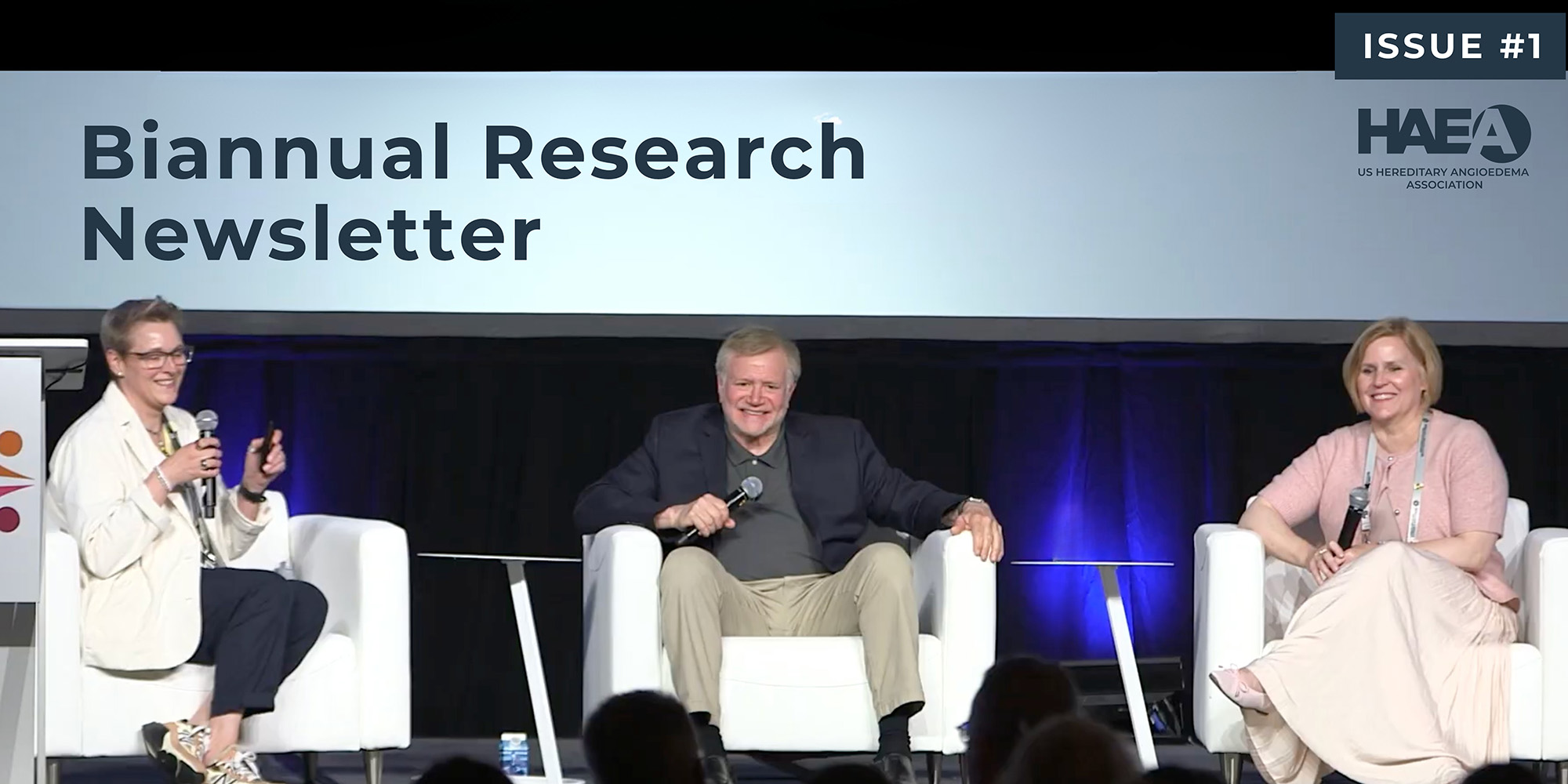
 Building a Brighter Future for HAE through Continued Research Every breakthrough in HAE care began with research—and with the participation of our HAEA friends. Research is how we move closer to a future with better treatments and a higher quality of life for everyone living with HAE.
The HAEA Research Team works year-round to initiate and lead research projects as well as keep our community informed about opportunities to contribute. Whether you are living with HAE or caring for someone who is, your story is powerful and shapes the future of HAE care.
This biannual Research Newsletter highlights the scope and breadth of the HAEA’s research activities and its positive impact on the health and well-being of our community.
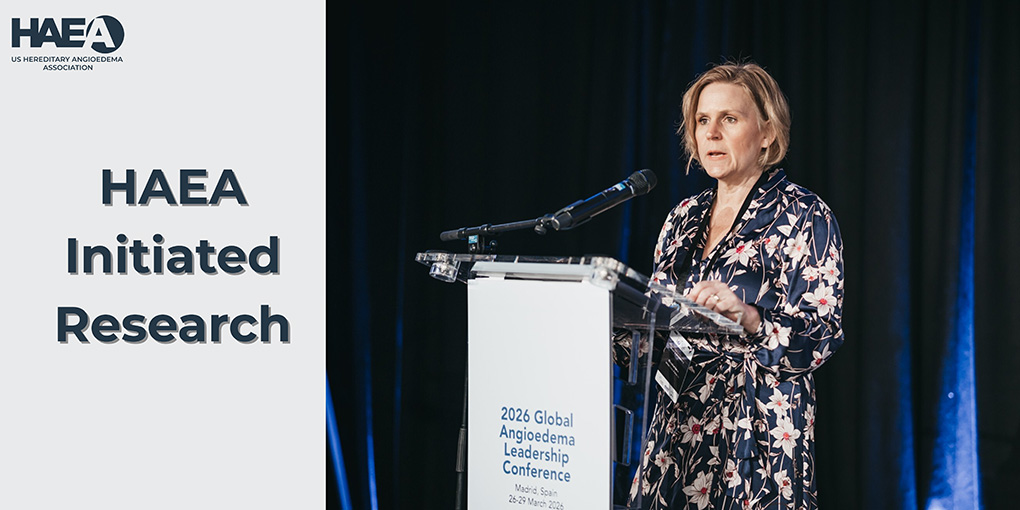
HAEA Initiated Research US HAEA Publishes First-Ever Study Showing the Number of People Diagnosed with HAE in the United States Recently published in a top-rated, peer-reviewed medical journal, this landmark HAEA-initiated study featured collaboration with leading HAE experts and specialists in data mining and demographic analysis.
We now estimate that nearly 10,000 people in the U.S. have received a diagnosis of HAE. As noted earlier, this number includes all forms of the condition—not just those caused by C1-INH deficiency—and provides the clearest picture yet of the HAE population in the US.
Publishing this study in a respected medical journal marks a significant milestone for the HAEA community. It gives us real numbers to back up what we've long known—that HAE affects more people than older estimates suggested. With this solid, US-based data, we can show we are a bigger force than anyone previously thought. And that puts us in a much stronger position to protect what matters most to people with HAE and their families.
You can read the full study in the Annals of Allergy, Asthma, and Immunology here! HAE with Normal C1-Inhibitor: Landmark Consensus Advances Care and Access In a joint initiative with HAEi, the HAEA Research Team convened a distinguished international group of HAE experts to deliberate and reach a consensus on the latest science regarding genetic mutations, physiological markers, diagnosis, and treatment for HAE with normal C1-Inhibitor (HAE with normal C1-INH). The research teams at HAEA and HAEi worked with the authors to finalize this landmark study, which was recently published in the prestigious medical journal: Clinical Reviews in Allergy & Immunology.
The HAEA and HAEi are pleased that this important expert-consensus medical journal publication includes a vital point that members of our community with HAE with normal C1-INH should cite if they run into insurance coverage hurdles when getting a prescription filled for an HAE treatment:
“Many if not most patients with possible HAE with normal C1-INH do not have a demonstrated pathologic mutation. Even without an identified mutation, a presumptive diagnosis of HAE with normal C1-INH made by an expert physician is sufficient. Since these patients are at risk of serious morbidity and mortality, treatment needs to be available even for a presumptive diagnosis of HAE with normal C1-INH.”
In essence, this statement by the world’s leading angioedema experts affirms that a diagnosis of HAE with normal C1-INH made by an expert physician should be enough for patients to receive prescribed HAE treatments. This consensus strengthens the case for patients encountering insurance barriers and marks an important step toward improving access to care for those living with HAE with normal C1-INH.
If you have been diagnosed with HAE with normal C1-INH by an expert physician and face insurance challenges, this published consensus may help support access to treatment. Share this information with your healthcare provider if coverage issues arise.
The HAEA Health Team is also here to help if insurance challenges arise. Contact an HAEA Health Advocate at (866)798-5598.
You can read the full study in the Clinical Reviews in Allergy & Immunology here! HAEA Publishes Breakthrough Study in Measuring HAE Quality of Life Recently, the US HAEA published the first-ever US-validated, HAE-specific quality of life (QoL) instrument in the prestigious Annals of Allergy, Asthma & Immunology. This unique, groundbreaking resource allows people with HAE to track the progress of their experience with HAE and overcomes the limitations of other currently available options. Our QoL instrument: (1) truly captures the way HAE affects the everyday life of individuals and families, and (2) demonstrates (to health insurers and others) the value of life-changing improvements in health and QoL that result from modern HAE medicines.
You can read the full study in the Annals of Allergy, Asthma & Immunology here! A Short Form Version of the QoL Resource Submitted to Medical Journal We completed a follow-up project to develop a condensed version of the HAEA quality of life (QoL) instrument and established a numerical value that indicates a meaningful QoL change when the instrument is administered over time. We anticipate this manuscript will be published in a peer-reviewed medical journal in the third quarter of 2026.
The scientific work associated with developing our QoL instruments was a multi-year effort that brought together the HAEA Research Team, HAE expert physicians, and health economists. These formidable research efforts could not have been completed without the steadfast support of the HAEA community. Over 500 HAEA friends participated in these research studies to bring these groundbreaking tools to the community. HAE with Normal C1-INH: HAEA QoL Instrument Validated for These Important Members of our Community Our HAE-C1INH-QoL instruments (long and short form) are only validated in people with HAE with C1-INH deficiency. It is important that members of our community diagnosed with HAE with normal C1-INH also have tools to measure their quality of life. We have completed a study that validates the HAE-C1INH-QoL instruments for the HAE with normal C1-INH population using two datasets that included 160 participants. We are preparing a manuscript, which will be submitted to a medical journal in mid-2026. HAEA Initiated Landmark Pediatric Study Presented at the March 2026 HAEi Global Angioedema Conference in Madrid Adolescents living with HAE face both physical and emotional burdens that are often under-recognized. Traditional research methods do not fully capture their real-life experiences, especially when children struggle to articulate complex symptoms and feelings. To address this gap, the HAEA recruited 19 adolescents (ages 10–17) to participate in a pioneering virtual body mapping study.
Body mapping uses visual storytelling to help participants express what HAE feels like both physically and emotionally. Each participant received materials at home and took part in three guided virtual sessions exploring identity, symptoms, fears, coping strategies, and sources of support. Through artwork, symbols, and personal narratives, these young participants created powerful visual representations of their HAE journeys.
The findings offer a deeper, child-centered perspective on how adolescents experience and navigate life with HAE. This innovative approach makes visible not only what hurts and what worries them, but also what helps them cope. By bringing coping strategies and support systems to light, the study provides actionable insights to guide clinicians and care teams toward more responsive care. HAEA Launches Longitudinal Survey to Track Comprehensive Impact of HAE over Time In January, the HAEA, in collaboration with Adelphi Real World, launched a groundbreaking year-long longitudinal study designed to capture the real-life experiences of individuals living with HAE.
Thanks to the extraordinary engagement of the HAEA community, we received 483 responses to the first survey in this five-part series. Your willingness to participate demonstrates the strength and unity of our community!
This study will generate critical real-world evidence that influences how physicians treat HAE, how insurers design coverage policies, and how pharmaceutical companies develop future therapies. Simply put, your participation helps shape the systems that impact your care. The Economic and Socio-economic Burden of HAE Caregivers The HAE burden of illness and its wide-ranging economic and socio-economic impact on individual patients are well known and detailed in an HAEA study published in 2021. What is less well understood, however, is how the quality of life and well-being of caregivers are affected by looking after people with HAE. Moreover, to our knowledge, there is little, if any, data that quantifies caregiver burden.
To address this gap and bring much-needed evidence to the table, we designed and conducted a comprehensive survey that characterizes the caregiver experience. We are in the process of analyzing the data with health economists and HAE expert physicians to prepare a medical journal manuscript to be submitted for publication in the summer of 2026, helping to bring critical caregiver insights to the broader medical and research community.
Help Blaze the Trail for New Innovative HAE Treatments by Participating in Clinical Trials What are Clinical Trials? Clinical trials are carefully regulated research studies that evaluate whether new therapies are safe and effective. They are a critical step before any investigational treatment can receive FDA approval.
Approvals for every HAE therapy available today exist because individuals in our community chose to participate in clinical research. Encouraging continued investment in the treatments of tomorrow relies on the commitment of our community to participate in ongoing clinical studies. What are the Benefits of Participating in a Clinical Trial? Taking part in a clinical trial can offer several important benefits, including:
- The opportunity to make a meaningful contribution to the future of HAE treatments
- Access to potential new HAE medications
- Close medical supervision from a knowledgeable HAE physician
- Compensation for your time and involvement in the study
Your involvement moves science forward and brings us closer to the next generation of therapies. Currently Recruiting Clinical Trials The HAEA continues to support and share information about ongoing HAE clinical research. Below are studies currently recruiting adults and/or adolescents with HAE Type I, II or with HAE with normal C1-INH in the United States.
Complete the Clinical Trial Interest Form to learn about studies that may be right for you. 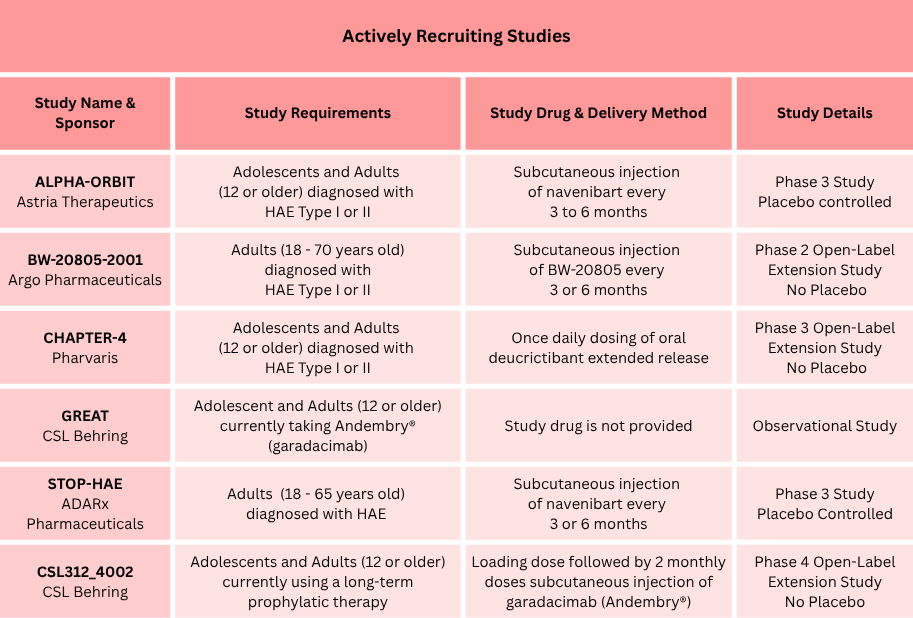

Research Beyond Trials: Unlocking Real-World Impact Even if a clinical trial isn’t right for you now, there are other ways you can contribute to advances in HAE research. Community Research One of the reasons why the HAEA community has 11 approved HAE treatments – something that is unprecedented in the rare disease landscape – is our ability to continuously attract investment in new therapies. Our Community Research program leverages the willingness of HAEA friends to anonymously share their opinions on the remaining unmet needs and challenges HAE poses for everyday life.
In 2025, 886 HAEA friends participated in 22 community research projects that offered invaluable information to support development of the next generation of HAE therapies.
The HAEA Health and Research Team actively recruits individuals with HAE—and caregivers—for community research initiatives. These projects help identify the needs, preferences, and challenges faced by the HAE community.
These opportunities may include:
- Online surveys
- Online focus groups or advisory boards
- One-on-one interviews
- And more!
Our community research opportunities offer compensation to recognize that your time is valuable. Information provided by HAE friends is always kept confidential and participation is entirely voluntary. You may opt out at any time.
Do you want to contribute to future research?
- Join online surveys
- Participate in interviews or focus groups
- Share your experiences to help shape new therapies
You can express your interest in Community Research by emailing research@haea.org. 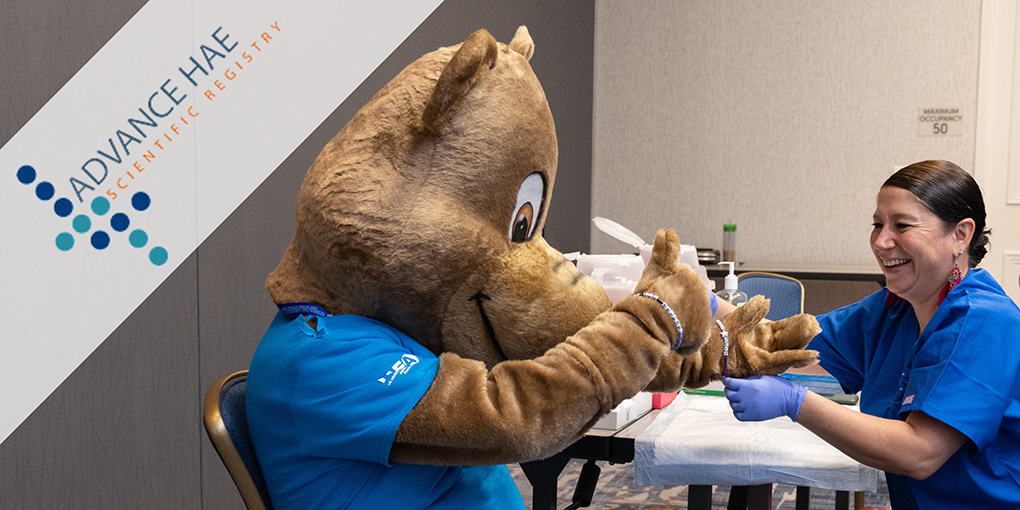 ADVANCE HAE Scientific Registry The ADVANCE HAE Scientific Registry is a nationwide research project driven by the HAEA community. The registry collects biological samples that are matched to participants who submit quarterly reports regarding their HAE attacks, symptoms, and therapies. The ADVANCE HAE Scientific Registry is an important tool helping researchers resolve the remaining mysteries of HAE and accelerate the advancement of future therapies.
At the 2025 National Summit, we delivered the organization’s most advanced registry operation to date, collecting 198 biological samples and launching first-time DNA collection that significantly expands the Scientific Registry’s research impact. HAEA Medical Advisory Board member, Dr. Henry Li and his team processed the biological samples that resulted in nearly 600 DNA extractions.
Everything you enter into the registry is confidential and plays a critical role. The ADVANCE HAE Scientific Registry helps researchers resolve the remaining mysteries of HAE and accelerate the advancement of future therapies.
You can join the HAE Scientific Registry by clicking here.
Together, We Advance HAE
Research is the foundation of progress. Every survey completed, every study joined, and every registry entry submitted brings us closer to a future where HAE is better understood, better treated, and easier to live with.
Together, the HAEA community is not just participating in research—we are driving the future of HAE care.