Editor's Note: This article is sponsored by KalVista Pharmaceuticals. The views and experiences shared are those of Nikia Davis, an employee of KalVista, and reflect her personal journey living with hereditary angioedema (HAE).
When I look at my life and my son's life, I see a story of progress.
Living with hereditary angioedema (HAE) has never been easy, and I don't want to minimize the challenges that individuals and families continue to face. There are still peaks and valleys. But when I compare my childhood experience with HAE to my son, Noah, now 22 years old, I'm reminded of how far we've come through awareness, advocacy, research, and community support.
I was diagnosed at a time when treatment options were limited and clinical trials were just beginning to emerge. My son was born into a different generation, one with more resources, more knowledge, and more opportunities. In many ways, his generation doesn't fully understand some of the challenges my generation faced, and that's exactly what progress looks like.
Today, I'm living beyond what I once imagined was possible for myself, and I have tremendous hope for future generations of people living with HAE.
You've experienced HAE firsthand for much of your life. How did your own journey shape the way you approached parenthood?
Growing up with HAE taught me resilience, but it also taught me what I wanted to do differently as a parent. For much of my childhood and young adulthood, HAE was simply something I endured. I accepted that attacks would happen, that I would miss school, miss work, events, and sometimes spend time in the hospital.
I have two children, one diagnosed with HAE and one who is not. So, when I became a parent, I wanted something different for my children. I wanted them to feel informed, empowered, and supported in their own unique and individual ways. My experience growing up with HAE gave me perspective, but as a parent, it gave me determination. I knew firsthand how challenging HAE could be, and I wanted to help create the best possible path forward for my family.
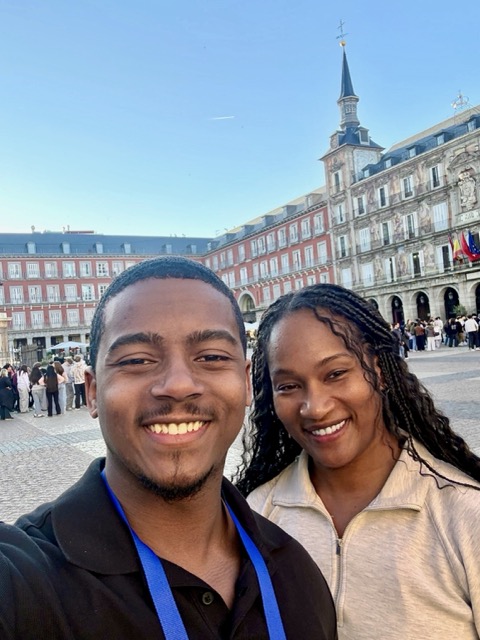

Can you describe what it felt like emotionally when you realized your son would also be navigating HAE?
It's a moment I'll never forget. I can still remember exactly where I was, what everyone was wearing, and even what was cooking in the kitchen.
What's interesting is that despite my own diagnosis, getting Noah diagnosed wasn't straightforward -- and I’m a nurse! We saw multiple pediatric immunologists and even had to leave our state before we found someone willing to run the appropriate tests.
While my mother felt a sense of guilt when I was diagnosed, what I felt was determination. Noah's diagnosis changed the trajectory of my life. I decided I would do everything I could to help him have a different experience from mine.
For years, I had simply lived with HAE. When Noah was diagnosed, I became an advocate. I wanted to understand all the options available to him, learn about clinical trials and treatments, and connect with people who could help us. More than anything, I wanted him to have a better quality of life.
As both a person living with HAE and a parent of a child with HAE, how would you describe the difference between managing your own condition versus supporting your child through his experience?
The difference was profound.
When it came to my own HAE, there wasn't much management available during much of my life. I experienced multiple airway attacks, spent time in intensive care, and accepted many limitations as part of my reality.
When Noah was diagnosed, my mindset completely changed. I became focused on learning, connecting, asking questions, and finding resources. The more I learned, the more empowered I felt.
One of the most important moments in that journey was connecting with the HAEA community. As a patient, I often stayed quiet. As a mother, I found my voice. I introduced myself to people, shared our story, asked questions, and sought out opportunities to help improve not only my son's life but the lives of others living with HAE.
I learned the importance of being your own advocate and of advocating for those you love. Looking back, I spent many years suffering in silence. Because of advocacy and community support, Noah's experience has been very different, and I'm incredibly grateful for that.
Many parents talk about balancing preparedness with the desire for their child to simply enjoy being a kid. How do you navigate that balance in your family?
Every parent wants their child to live a full life, and that was always our goal for Noah.
We never wanted HAE to be something he was afraid to discuss. Instead, we wanted him to understand it and feel empowered by knowledge. From a young age, we taught him what HAE was and how to explain it to others.
By the age of six, Noah was speaking at community meetings and helping educate first responders about HAE. We worked with his teachers, coaches, school nurses, and others in our community so they would understand his condition and know how to help in an emergency.
That approach gave Noah confidence. Rather than allowing HAE to define him, we encouraged him to define what HAE meant to him.
It also became a family effort. We wanted every member of our family to feel empowered rather than burdened. The support we received from our community was incredible, and it helped all of us navigate this journey together.
In what ways has your son's HAE journey been different from your own experience growing up with the condition?
Because of advocacy and advances in care, each generation has had opportunities that the generation before them did not.
I was diagnosed at age five but didn't gain access to treatment until I was 29 years old. Noah was diagnosed at age three and received treatment much earlier in life.
The impact of that difference cannot be overstated. I missed significant amounts of school, struggled with interruptions to work and daily life, and often had to put important moments on hold because of HAE attacks.
Noah's experience has been very different. Treatment and support have allowed him to participate in school, activities, and experiences that would have been much more difficult for me growing up.
When I look at his generation, I feel tremendous hope. We have more treatment options, greater awareness, and an incredible community of advocates working to improve the future for everyone living with HAE.
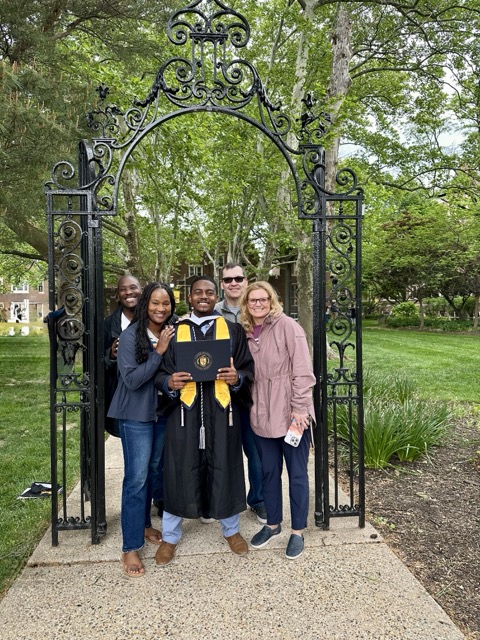
How has living with HAE yourself influenced the conversations you have with your son about resilience, confidence, and not letting HAE define him?
One of the most important lessons I wanted Noah to learn was that HAE is something he lives with but it is not who he is.
Fortunately, Noah has always been naturally resilient and confident. From a young age, he embraced opportunities to share his story and educate others about HAE.
Every time he spoke about his experiences, he became more empowered. He learned that awareness matters and that sharing his story could make a difference for someone else.
His journey has not been without challenges. At six years old, he spent 92 days in the hospital after experiencing an adverse reaction to steroids. That experience became a turning point for our family and reinforced our commitment to advocacy.
Despite those challenges, we encouraged him to pursue the activities and experiences he loved. We simply made sure that the people around him understood his diagnosis and knew how to help if needed. We taught him how to advocate for himself, recognize when he needed support, and live confidently.
Caregiving can carry a significant emotional weight, especially when you deeply understand what your child may be feeling physically and emotionally. How do you care for yourself while also supporting your family?
There was a time when I didn't take care of myself particularly well, and I eventually realized that caring for myself was essential, not just for me but for my family.
One of the most important lessons I've learned is that rest is not a luxury. It's a necessity.
I've also learned the value of asking for help and accepting it when it's offered. Throughout our journey, we've been fortunate to have an incredible support system of family, friends, coworkers, and members of the HAE community.
Sometimes support means practical help. Sometimes it simply means having someone listen. Either way, I've learned that accepting support doesn't make you weaker, it strengthens everyone involved.
What would you want other parents, caregivers, or families in the HAE community to know—especially those who may be early in their journey or feeling overwhelmed?
First and foremost, you are not alone.
Today's HAE community has access to resources, support networks, knowledgeable healthcare professionals, and treatment options that simply didn't exist when I was growing up.
The journey can feel overwhelming at times, especially in the beginning, but there is reason for hope.
When I look at my son's life, I see the impact that awareness, advocacy, and community support can have. I see a young man who embraces life fully despite living with HAE. I see opportunities I never imagined possible when I was his age.
That's why I remain optimistic about the future. Progress doesn't happen overnight, but it does happen. And when I look at the next generation of people living with HAE, I believe the future is brighter than ever.
Are you interested in sharing your story? The HAEA Community Blog wants to hear from you! Get started here.
Thank you to our Sponsor!